
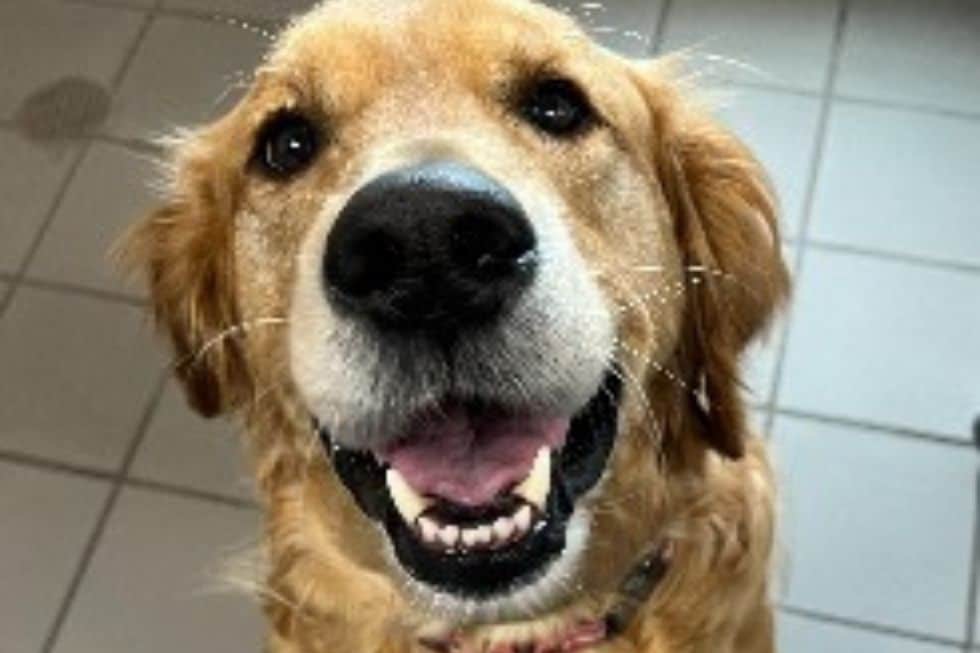
On Presentation
Cisco was quiet, alert, responsive, and dehydrated with significant nasal stertor, but no obvious nasal discharge. Cisco had mild periocular alopecia OU, generalized lymphadenopathy with prominent mandibular, prescapular, and popliteal lymph nodes. Cisco had diminished nasal airflow, clear lower airways, and splenomegaly was noted upon palpation of patient’s abdomen.
Initial Diagnostics
- CBC: Hematocrit 29.1, Platelets 113,000
- Chem: Blood Glucose 72, Total Protein >12, Albumin 2.2, ALT 145
- ePOC: Ionized Calcium 1.49, Potassium 5.5, pH 7.353
- PCV 35, Total Solids 12.1
- Abdominal Ultrasound
- Generalized splenomegaly
- Borderline Hepatomegaly
- Mild diffuse abdominal lymphadenopathy
- Auto agglutination Test with saline – negative
- View Chest Radiographs were normal upon radiologist review
- Urinalysis w UPC – Specific Gravity 1.013, Protein 1+, and UPC 1.2
- Cytology from Splenic Aspirates sent to Antech – The aspirates contain reactive lymphocytes and significant numbers of intracellular, phagocytized, and extracellular Leishmania amastigotes.
- Leishmania Infantum by IFA – Positive at Greater than 1:3200

Leishmania infantum amastigotes in a macrophage from a splenic aspirate of a clinically infected dog. Scale bar indicates 10 microns. – courtesy of TodaysVeterinaryPractice.com
Next Steps
Cisco began treatment for Stage 3 Leishmaniasis, which consisted of Allopurinol and Impavido (miltefosine) orally. Impavido was a 28 day course that was completed with some hyporexia and intermittent vomiting noted by owner. Allopurinol was continued for 6 months.
Treatment Challenges
7 Days after starting medical therapy for Leishmaniasis, Cisco developed Acute severe mucocutaneous facial dermatitis that was attributed to the disease process itself and resolved with time and Animax ointment. A drug reaction was considered, but ultimately dismissed as a cause.
Allopurinol medical Therapy of Leishmaniasis causes an excess of Xanthine Crystals in the urinary tract. To counteract this side effect, dietary therapy was initiated. Patient started treatment eating Purina Pro Plan sensitive skin and stomach (chicken/rice), which is one of the recommended diets to try and avoid crystals, but when crystals persisted post conclusion of Impavido therapy, Cisco was switched to Hill’s U/D and crystals were no longer present in urinalysis performed 60 days later and no stones noted during a follow up ultrasound.
Signs and Symptoms to look out for in potential patients:
- Localized or generalized lymphadenomegaly
- Loss of body weight
- Decreased appetite
- Lethargy
- Pale mucous membranes
- Splenomegaly
- Polyuria and polydipsia
- Fever
- Vomiting
- Diarrhea
- Exfoliative dermatitis with or without alopecia
- Erosive-ulcerative dermatitis
- Nodular dermatitis
- Papular dermatitis
- Pustular dermatitis
- Blepharitis (exfoliative, ulcerative or nodular) and conjunctivitis (nodular)
- Keratoconjunctivitis, either common or sicca
- Anterior uveitis
- Mucocutaneous and mucosal ulcerative or nodular lesions (oral, genital and nasal)
- Epistaxis
- Lameness (erosive or non-erosive polyarthritis, osteomyelitis and polymyositis)
- Atrophic masticatory myositis
- Vascular disorders (systemic vasculitis and arterial thromboembolism)
- Neurological disorders
Typical Diagnostic Findings
- Mild to moderate normocytic normochromic non-regenerative anemia
- Leukocytosis or leukopenia: lymphopenia, neutrophilia, neutropenia
- Thrombocytopenia
- Impaired secondary hemostasis and fibrinolysis
- Serum biochemical profile with proteins electrophoresis
- Hyperproteinemia
- Hyperglobulinemia (polyclonal beta and/or gammaglobulinemia)
- Hypoalbuminemia
- Decreased albumin/globulin ratio
- Renal azotemia
- Elevated liver enzyme activities
- Proteinuria
Transmission Routes
L. infantum infections are typically transmitted by specific species of “insect vectors” belonging to the phlebotomine group (also called “sand flies”). These vectors represent the major route of transmission in endemic areas.
Non-vectorial transmission routes have also been demonstrated (sexual, vertical and blood transfusion) in dogs. The non-vectorial transmission may have a major impact on “non-endemic areas” where sand flies are absent or present in very small numbers.
Many species of Leishmania infect both humans and animals and are zoonotic.
The sand fly has been reported in the Southern United States and along the Atlantic Coastline, however to date most affected patients in the US obtain the disease internationally. As the climate changes and the sand fly habitat expands, locally acquired infections are anticipated to rise.

Important Points
- Leishmaniasis should be considered in cases where symptoms and countries of origin indicate the possibility for exposure to Leishmania parasite. Major Regions/Countries of Concern – South America, Middle East, Africa, and Southern European Nations like Spain, Greece, and Italy.
- Leishmaniasis has been reported to be acquired naturally in rural Southern US where the sand fly is prevalent.
- Scientists have found Leishmania DNA in some ticks taken from dogs, but tests show this does not mean ticks actively inject and transmit the living parasite to cause active infection.
- Leishvet.org is a valuable resource for treating these patients
Outcome
Cisco completed 28 days of Impavido medication therapy and more than 6 months of Allopurinol medication therapy. He is currently eating the U/D diet to combat the Xanthine Crystals. No mucocutaneous or other cutaneous lesions or nasal signs remain. Current Plan is to recheck his Leishmaniasis Infantum by IFA Titers in 2 months. Owners report he is more active, playful, and eating better than ever before.
– Casey Gardiner, CVT & Dr. Erika De Papp, DVM, DACVIM (Internal Medicine)